Character Names

In an earlier post, I mentioned that the characters have pretty much named themselves. The more I got to know each of them as I worked, it was easy to find the right name. I’ve read articles about naming characters and the different approaches. Scrivener even has a random name generator. But, I’ve always loved coming up with names.

Yesterday, though, I realized I’d made a mistake. One of my characters is first generation Irish. I’d named her Stella. I thought the name really suited the character I had in mind. I had a sense of how Stella would think and how she would act.

RoseUnfortunately, Stella is not an Irish name. Today I’ve been surfing, looking for the another name that would work for my character. It’s not just that it has to be Irish, It also has to suit the personality of the character I’ve created. I’ve come up with five names and I’ll need to think about them for a while.

I think names do matter. William Shakespeare’s Juliet declared, “What’s in a name? That which we call a rose by any other name would smell as sweet.” But then, she meant that even though Romeo came from the house of Montegue, the enemies of her family, he was a good and worthy person and his name didn’t define him. I think it may not have made him a bad person, but it did define who he was.

Thanks for following the journey! I welcome feedback and suggestions.

If you enjoyed this post, please consider subscribing to my blog using the link on the right side of the page.

If you’re new here, you may want to scroll down to the bottom of the page to start the story at the beginning. If you don’t have that much time, check out the “About the Journey” tab at the top of the page.

Image Copyright: www.123rf.com

It was a dark and stormy night…

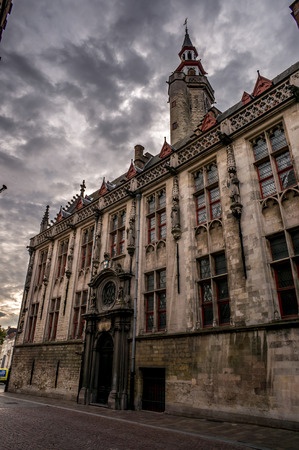
CastleRight now, I’m going through each scene in my story and reviewing the setting. Where does the scene take place? Have I identified the place? Have I described it so the reader can get a feel for it?

I’ve already identified the towns or cities where scenes take place, but what I’m working on now is more specific. And more integral to the action and the story.

Setting serves different purposes. First it grounds the scene. Readers already know (or think they know) something about what will happen based on where it occurs. Is it a conversation over dinner at the kitchen table? Or in an elegant ballroom? Is it a seedy motel room or a suite at the Ritz? A dingy front hall or an elegant foyer?

Setting can also tell readers something about the characters. One of my characters has an office in his home and that office is paneled with dark wood and the shelves that go all the way up to the ceiling are overflowing with books. The walls are covered with diplomas and citations. The room smells faintly of pipe smoke. Does that tell you something about the character? Does it surprise you to know he is a college professor? Probably not.

I’m also considering weather, time of day, light, and even the smell of some of the places. A scene that happens on the street in a blowing snowstorm has a different feeling than one that happens on a front porch on a summer evening. Really, the same thing can happen but it would have a different feel. I’m working to make sure what I write feels the way I imagine it to be.

If I’ve done my job well, the setting will enhance my novel and be as important as any character in telling the story.

Thanks for following the journey! I welcome feedback and suggestions.

If you enjoyed this post, please consider subscribing to my blog using the link on the right side of the page.

If you’re new here, you may want to scroll down to the bottom of the page to start the story at the beginning. If you don’t have that much time, check out the “About the Journey” tab at the top of the page.

Photo Copyright: <a href=’http://www.123rf.com/profile_aaron90311&#8242;
>aaron90311 / 123RF Stock Photo</a>

Status Update

I’ve had a lot of questions about my novel and where I am or how I’m doing, so today I’m going to share an update. Each day is a little different and as I’m writing this, I realize I should have a better plan as I proceed. I guess that will be my next step, to identify all I need to accomplish and a logical work sequence.

I’ve been working on fleshing out my characters. It is interesting that as I do, I realize what is important to each character. This helps me enrich the story with more details. I can also see that subplots will develop as I get to know each character better.

There is more research to be done on the various settings in the book. I knew much of the story would take place in New England, a part of the country I’m not very familiar with. I have resources to help me, but I’ve had to pick locales based on proximity to the shore, to each other, and to a Coast Guard station. Once I think I have a good location, I check the demographics of the town back in the time that part of the story takes place.

researchI’m constantly checking online for information about life and culture during different time frames. I’ve looked up how young people would have dressed and what religious celebrations were common at the time. Did I mention I love Wikipedia and gladly contribute during their fund raising drive?

Accurate details help make the story real to readers. I know it would distract a reader if I referenced something that didn’t actually exist, such as putting seat belts in a car from the 50’s. During my research, I’ve also found interesting details to incorporate into the story.

So that’s what I’m working on now. I’ll try to share some of what I learn as I write.

Thanks for following the journey! I welcome feedback and suggestions.

If you enjoyed this post and would like to receive email notification of future posts, please consider subscribing to my blog using the link on the right side of the page.

If you’re new here, you may want to scroll down to the bottom of the page to start the story at the beginning. If you don’t have that much time, check out the “About the Journey” tab at the top of the page.

Photo Copyright: <a href=’http://www.123rf.com/profile_dimaberkut’>dimaberkut / 123RF Stock Photo</a>

Reading about Writing

Since I began this project, I’ve read a lot about writing. There are many, many books out there. I did a search on Amazon for “writing” and it came back with 42,056! Some books are written by writing professors or teachers. Many are written by famous writers. Stephen King wrote On Writing: A Memoir of the Craft. Anne Lamont wrote Bird by Bird: Some Instructions on Writing and Life. In his book Ernest Hemingway on Writing, Larry W. Phillips collected the musings of the legendary author.

BooksAnd then there are the blogs. I subscribe to several, including Fiction University, A Writer’s Path and Writer’s Digest. Each day, I get helpful hints in my email.

At times, I feel guilty spending so much time reading about writing when I think I should be writing instead. But I’ve learned so much! As I’ve acknowledged from the beginning, even though I’m a writer, I’ve never written a novel.

The advice I’ve read has been enormously helpful. It got me over the brick wall I ran into after last November. I had 50,000 words, but I didn’t know what I had or how to organize it. If I wanted people to read my book (and I do), I felt a responsibility to deliver the best possible book. I wanted a book people would enjoy reading and would recommend to others.

So far, the advice I’ve read has helped me structure my story into a readable structure. As I continue, I’ll incorporate what I’ve read as I work to enrich my character descriptions, create realistic settings and craft believable dialogue.

In case anyone is interested, I’m going to add a page to this site which includes the resources I’ve found. It will be titled “Resources” in the tabs above. I’ll try to update it on a regular basis. It’s my way of paying it forward.

Thanks for following the journey! I welcome feedback and suggestions.

If you enjoyed this post, please consider subscribing to my blog using the link on the right side of the page.

If you’re new here, you may want to scroll down to the bottom of the page to start the story at the beginning. If you don’t have that much time, check out the “About the Journey” tab at the top of the page.

Photo Copyright: 123rf.com

We Have a Title (Maybe)

As I’ve worked on my novel, I’ve struggled with the title. I realize the title and the cover will be a big part of selling the book. You may not be able to tell a book by it’s cover, but if the title and cover aren’t appealing, I know I probably wouldn’t pick it up, or download it on to my Kindle.

My first working title was Lost at Sea. One problem with that title is it gives away too much of the story. Another problem is there are several books by that name already listed on Amazon.

So, I decided the boat name would be the title of the book. At that time, the name of the boat was Leanan Sidhe. In Celtic folklore, Leanan Sidhe is a beautiful fairy who takes a human man as a lover. I liked the symbolism for my protagonist and I like the Irish touch since one of my characters is Irish. But the problem with Leanan Sidhe is that no one would know how to pronounce it, making it a very bad title for a book. Incidentally, that also makes it a bad boat name for the same reason. Boat names need to be easy to pronounce and understand on a radio. Scratch that!

The seaFor a few weeks, the book was titled Come Sail Away. I had the Styx song stuck in my head for quite a while and some of the lyrics kind of went with the story, I mean except the part about the starship. Ultimately, though, I decided Come Sail Away is an invitation to someone and there is no such invitation in my book. Pity, because I really like the song. Maybe I could even have worked aliens into the plot . . .

I’ve been working with the current title long enough now I’m ready to share it. That’s not to say it won’t change down the road, but for right now, I like it. The title is The Sea Beckoned. Let me know what you think.

Thank you for following the journey! I welcome feedback and suggestions.

If you enjoyed this post, please consider subscribing to my blog using the link on the right side of the page.

If you’re new here, you may want to scroll down to the bottom of the page to start the story at the beginning. If you don’t have that much time, check out the “About the Journey” tab at the top of the page.

Photo Copyright:  <a href=’http://www.123rf.com/profile_mihtiander’&gt; / 123RF Stock Photo</a>

And Then I Found . . .

Shortly after committing to NaNoWriMo, I left town for a week long conference. After the event, I planned a visit a nearby cousin afterward. Since she is the daughter of my father’s sister, I shared my writing plans with her.

As we talked, she mentioned she might have some information that would be helpful. Her mother had been the keeper of all the family documents once our grandfather was gone. When her mother downsized, my cousin took possession of everything.

Together, we went through some of the boxes in her attic. We came upon a treasure trove – letters sent by my father to his father during the journey. There were seven of them and they provided a wealth of information about his route, his schedule, and, most importantly, about his feelings. They are fascinating and will be invaluable to me in my writing. I scanned the letters with my portable scanner.

She also had a copy of the report from the private investigator who was hired by my grandfather after my father disappeared. I wanted to scan that, too, but it was held together by a rusty staple I was reluctant to remove. She encouraged me to take the report and the letters home. I was eager to read everything!

The Wheels Started to Turn

The idea of writing a book rolled around in my head for a couple of months. How much did I know? Who could tell me more? My father disappeared in 1977. That was a long time ago.

I know nothing about the Bahamas. I don’t know much about New England where he spent most of his life. And, by the way, I didn’t even know my father.

I left the box on the floor of my office, unopened, for most of two months. Then, in late September, I pulled it out and went through what I had. Once again, I was taken by the story, the reality and the potential. The reality is my heritage, unrealized and forever unknown.

The potential, though, called to me. That was real. The immediate problem was that I’ve never written fiction. I would have to make up a lot of the story, as well as the characters in it.gears

Thinking of the project that way actually made it seem more approachable. I did have some rough information as a foundation. I would invent what I didn’t know and create the people myself. I knew I would alter many of the facts I did have to protect the privacy of the people who are still around.

The wheels were starting to turn.

The Seed was Planted

Last summer, I came in contact with journals written by the wife my father divorced shortly before embarking on his journey. Scattered through the boxes were copies of important papers regarding the boat and the official police report of finding it unmanned, aground. There were many letters between assorted attorneys and paperwork about the salvage of the boat. A preliminary report of death from the State Department was at the bottom of the box.seedling

As I read through the paperwork, I realized, here’s a story. If I were to write it, I knew I would have to write it as fiction because there is so much I don’t know, no one knows. I would have to invent a lot of the story. The seed was planted.


If you enjoyed this post, please consider subscribing to my blog using the link on the right side of the page.

Photo credit: http://www.123rf.com

Lost at Sea

PendragonIn 1977, a man was lost at sea while sailing alone in the Bahamas. His boat was found, intact, but he was missing, presumed dead. No one knows for sure what happened. The seas in the area are known to be among the roughest for sailing. There were pirates around. Drug dealing was done from some of the islands near where his boat was found. The sharks were spawning. It was the beginning of hurricane season. He had seriously injured his arm which may have affected his ability to handle his boat. There was reportedly someone who had relentlessly pursued the vintage craft the man had lovingly restored. His life was not going well at the time and he could have staged his own disappearance. No one knows.

Follow the Journey

Last summer, I happened upon information about a story I believe bears telling. Ten years ago, I discovered the father I never knew was lost at sea in 1977. Over the last few months, I’ve learned a lot about the man I never knew. What no one knows is what actually happened when he disappeared.

old documentsAn abundance of information has come to me from several sources. It was serendipity, really. I still don’t know what happened to my father. What I do know is the information I have makes a strong basis for a good story.

So many people have been intrigued by my experience that I’ve decided to share my journey turning the information I have into a novel. By profession, I write non-fiction. I’m a personal historian. I’ve never written fiction. With my novel, I’ll be making up much of the story as I go.

In this blog, I’ll share the ups and downs, successes and failures as they happen. When we’re done, you’ll be able to read the finished product, knowing the backstory of how it came to be. Likely, I will turn to readers for opinions or advice as I go.

This, then, is my invitation to you: follow the journey!


If you enjoyed this post, please consider subscribing to my blog using the link on the right side of the page.


Photo Copyright: http://www.123rf.com