Status Update

A friend asked me recently how far along I am in my story. I told her the same thing I’ve been telling others. I figure it’s going to take me a good year to get to a passable draft.

Then she asked me how much of the story I know. I told her I know the whole story. I know how it starts, how it ends and pretty much of what happens in the middle.

I don’t know everything about all my characters. I don’t know where everyone came from, what their family is like or even how all of them look. I know how some of them talk, but some I don’t, yet. If they have back stories worth exploring, I haven’t identified them right now.

I’m not sure where all the different parts of the story take place. Some settings I have figured out and some I haven’t. I’ve spent a lot of time on Goggle Maps and Wikipedia researching possibilities.

I’ll need to add some more challenges for my characters to overcome, but, at this point, I’m not sure what they are. Subplots need to be added. I spend a lot of time studying and refining the narrative arc to make sure the story stays interesting enough to engage a reader and then keep them engaged. There will need to be high points, low points and time to rest built into the flow of the story.
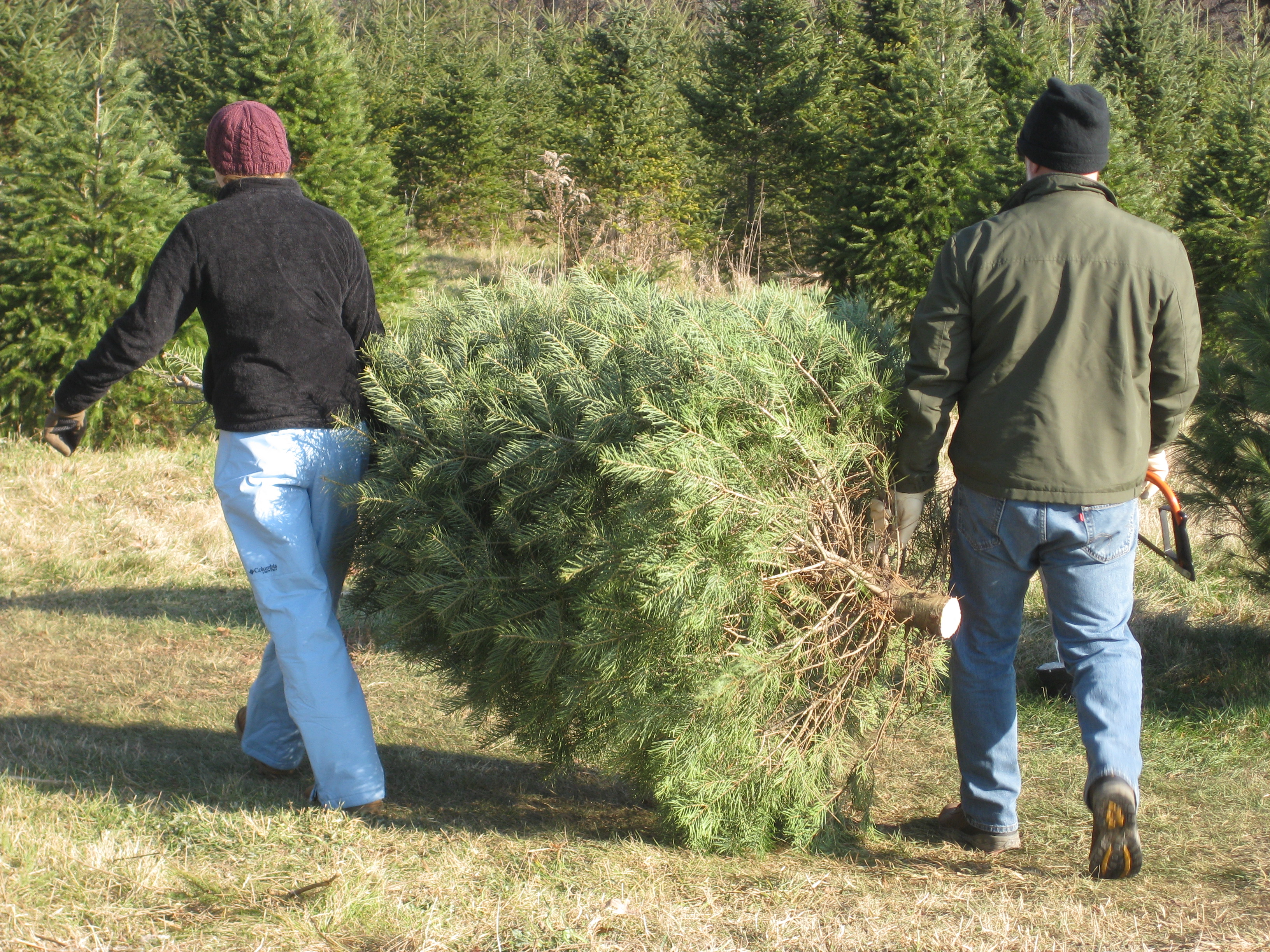
xmas tree1After our conversation (thanks, Nan), I figured out how to describe my progress. Right now, my story is like a freshly cut Christmas tree. It’d been chosen and claimed and is standing, bare naked, in my world. Now it needs lights, all our special ornaments and a star at the top to be the best Christmas tree I know it can be.

Have I mentioned how particular I am decorating our Christmas tree? It’s going to take some time.

xmas tree2Thanks for following the journey! I welcome feedback and suggestions.

If you enjoyed this post, please consider subscribing to my blog using the link on the right side of the page.

If you’re new here, you may want to scroll down to the bottom of the page to start the story at the beginning. If you don’t have that much time, check out the “About the Journey” tab at the top of the page.

Back from Camp

Camp-Winner-2015-Twitter-ProfileCamp ended last night at midnight. Organizers describe Camp NaNoWriMo as “An Idyllic Writers’ Retreat, Smack-Dab in the Middle of Your Crazy Life.” I met the camp goal I set for April which was editing everyday and that makes me a winner! Everyone who meets his or her goal is considered a winner.

This time, the actual work was a little less onerous because the goal was readily achievable. I could do it while living my everyday life. When I was writing 50,000 words last November during National Novel Writing Month (NaNoWriMo), writing became my life.

My next goal is to prepare for a new adventure: Revise Your Novel in 31 Days. The program was created by Janice Hardy as part of her Fiction University, a great web resource for writers.

She created the program for the month of March, but I didn’t learn of it until later in April. That’s OK; I wasn’t ready for it in March. In fact, I’m not ready yet. My goal is to start in mid-July.

The program is designed for novels that are farther along than mine. Fortunately, it will be available until the end of the year. I checked.

Odd, isn’t it? I have a lot of work to do to get my story to the point where I can consider a program to revise it? But I get it.

I read that if I finished 50,000 words during NaNoWriMo, I probably wouldn’t even have a first draft for a novel; I’d have a zero draft. Maybe that would be less true for an experienced writer, but it was absolutely the case for me. I want my novel to be 80,000 to 100,000 words. But I don’t need to just add more words; I need to add more story, to craft my zero draft into something other people (besides my mother) will want to read.

My next checkpoint is July 13.

If you enjoyed this post, please consider subscribing to my blog using the link on the right side of the page.

Thank you for following the journey! I welcome feedback and suggestions.

If you’re new here, you may want to scroll down to the bottom of the page to start the story at the beginning. If you don’t have that much time, check out the “About the Journey” tab at the top of the page.

Progress

progressWell, I finally feel like I made significant progress yesterday! I moved around a bunch of scenes to create a flow I think works better. I’ve been concerned about the sequence and timing of events and felt the story could drag and readers would lose interest. I was also worried if there was sufficient character motivation.

Don’t get me wrong. I have a whole lot of writing and re-writing left to do. With the changes, I need to modify a lot of transitions and create some new ones. Characters and settings need to be more fully developed. I want to add more sub-plots. In the original draft, I only had one sub-plot, and it was really more character back story than sub-plot.

Still, I’m glowing in the success I have from yesterday. This morning, I reorganized my printed copy to reflect the changes. It feels like progress. Progress is good.

Now, back to the grindstone!

If you enjoyed this post, please consider subscribing to my blog using the link on the right side of the page.

Thank you for following the journey! I welcome feedback and suggestions.

If you’re new here, you may want to scroll down to the bottom of the page to start the story at the beginning. If you don’t have that much time, check out the “About the Journey” tab at the top of the page.

Photo Copyright: / 123RF Stock Photo

Editing is Hard

Editing is hard work!possible cover pix I thought creating the story would be difficult, but once I got into the groove, the writing flowed. Now it seems all I’m doing is throwing out scenes that don’t advance the plot. And I liked some of those scenes a lot!

I don’t actually throw anything away, but the folder called Unused Material keeps growing. At the end of  National Novel Writing Month (NaNoWriMo) in November, I had over 50,000 words. I thought by now my word count would be higher, but it continues to fall.

The work I’ve started with is tightening the story and refining the narrative flow. Hopefully my efforts will result in a leaner and meaner version. I’m thinking of this as diet and exercise to make the book stronger. When I’m satisfied, I will dress the story up with all the compelling descriptions and details I have in mind. The result should be an attractive and appealing novel. That’s my plan!

If you enjoyed this post, please consider subscribing to my blog using the link on the right side of the page.

If you’re new here, you may want to scroll down to the bottom of the page to start the story at the beginning. If you don’t have that much time, check out the “About the Journey” tab at the top of the page.

Photo Copyright: <a href=’http://www.123rf.com

I’m Going to Camp!

I’m going to camp next month! Camp NaNoWriMo runs the month of April and it’s sure to be fun. It’s a virtual camp, so I can work in a temperature controlled environment, I don’t have to worry about bugs, and I can still share an evening glass of wine with my husband. I’m going to be assigned to a ‘cabin’ with other writers with similar interests.

I’ve requested placement with others who are also editing their novels. All month, I’ll work with writers who are doing what I’m trying to do. Beyond that, there’s talk about campfires, hikes and getting lost. I’m not really sure what I’ve gotten myself into. But then, that’s not the first time I’ve said this during this journey . . .

Camp-Participant-2015-Web-Banner

November Begins

November 1, it was time to write. I sat down that morning to write my 2,000 words. I stared at the blank screen trying to figure out how to begin. What was I thinking? I arranged and rearranged my desk as panic rose in my throat. I thought about starting a game of Bejeweled or checking Facebook again.

November 1Instead, I took several deep breaths. Then I looked again at the project I had created and read through the preliminary list of scenes I planned. Since I wasn’t sure how to start, I decided to just pick a scene to write, any scene. I just needed to start. I picked the one that seemed the easiest.

I continued that way the whole month of November. Each time I finished a scene, I picked a new one to write. Often, writing one scene would make me realize there was another I needed to add to the list. Sometimes, I wrote something that meant something else had to happen in an earlier scene. If that scene was already written, I’d make a note to make the change later.

I made it a point not to revisit scenes I’d already written except when I needed to be sure the story transition was right. I didn’t go back and edit anything in November. I was trying to write 50,000 words in one month, for goodness sake! I saw no sense in erasing or deleting even one word.

The program made it easy to add and move around scenes and also to make notes about changes to be made during the editing process. I kept the scene list open in front of me on the screen. Unlike some people who like to write on a totally blank screen, I liked having my scene list and document notes right in front of me. It gave me a sense of control and, as the scenes were written, I could see I was accomplishing something.

In the beginning, I was keeping a manual list of words per scene. That got to be a hassle when I started adding more detail into scenes which changed the word count. Then I learned the Scrivener Target tool could track my progress both daily and for the project as a whole. At the end of each day, I charted my word count on the NaNoWriMo website. Watching the line on the word count graph line move up kept me going — along with my determination to succeed (or fear of failure!) It was like any journey; it began with a single step.

Thank you for following the journey! I welcome feedback and suggestions.

If you enjoyed this post, please consider subscribing to my blog using the link on the right side of the page.

If you’re new here, you may want to scroll down to the bottom of the page to start the story at the beginning. If you don’t have that much time, check out the “About the Journey” tab at the top of the page.

Photo Copyright: <a href=’http://www.123rf.com/profile_eyematrix’&gt; / 123RF Stock Photo</a>

Transition

From the beginning of this blog, I’ve talked about the novel I am writing which is loosely based on my father’s experiences. I mentioned that I have to write this as fiction because no one really knows what happened. My father was missing when his boat was found unmanned.

This blog serves as a transition. It is the last blog where I will mention my father. From now on, I’ll focus on building the story as a novel. I’ll talk about characters (not real people) and choosing an ending. I won’t be constrained by facts or reality. I still need to choose venues for many scenes and homes for different characters. I’ll probably use some real places, but I’m likely to create a few of my own.

CharactersThe leading character in this story is a man named Jake Chambers. I’ll tell you more about him as I get to know him. I’ve read some writers struggle naming characters, but so far these characters have pretty much named themselves. While some of them may have started out based on real people, I find they’ve shaken off such limitations and developed their own identities. Honestly, since I really didn’t know many of the real participants, it’s been easy to let them become their own people. I’ll introduce you to them as they come into the story.

Thank you for following the journey! I welcome feedback and suggestions.


If you enjoyed this post, please consider subscribing to my blog using the link on the right side of the page.

If you’re new here, you may want to scroll down to the bottom of the page to start the story at the beginning. If you don’t have that much time, check out the “About the Journey” tab at the top of the page.

Image Copyright: <a href=’http://www.123rf.com/profile_denispc’&gt; / 123RF Stock Photo</a>

Scheduling Time to Write

As I considered committing to National Novel Writing Month(NaNoWriMo), I knew I had a major obstacle. I planned to be out of town for fifteen days at the beginning of the month and then, a few days after we returned, we would drive ten hours each way to spend Thanksgiving weekend with family. And while I believed I could write while I was gone, I also knew I would be distracted by family, friends, and opportunities to play.

I decided the best way to accomplish my goal was to set higher word count goals for the days when I thought I could accomplish more. 50,000 words works out to 1,667 words per day. I set a goal of 2,000 words for most days knowing that some days I wouldn’t be able to write much at all. For instance, the days I flew to and from California, I really didn’t think I could get much done and set a goal of just 500 words for each. While I was visiting family for Thanksgiving, I planned to write a 1,500 words each day since I knew we would want to do other things. For the last day of November, when we would spend ten hours driving, I set a lowly goal of 250 words. On a day when many writers would be hard at work morning to night to finish, I knew that wasn’t logistically possible for me. Committed or not, I knew I couldn’t write much balancing a laptop on my lap in a moving car.

Daily targetI created this calendar as a visual reminder of my plan. The NaNoWriMo website (nanowrimo.org) has a tool where I would post the number of words I actually wrote each day. I also logged my progress in my planner so I could track the days I was most productive. If I did it again, I would add a cumulative word count on each day of this calendar.

The calendar was a sobering visual of the crazy commitment I had made. I certainly had my work cut out for me in November!

If you enjoyed this post, please consider subscribing to my blog using the link on the right side of the page.

If you’re new here, you may want to scroll down to the bottom of the page to start the story at the beginning. If you don’t have that much time, check out the “About the Journey” tab at the top of the page.
Planning (Just a Little)

24155520_sIn the little time after I returned from my conference, I worked to plan my novel. I wanted to be a planner, but in November I would mostly be writing by the seat of my pants. I knew I had valuable information but I had no road map. I did what I could in the time I had.

The first thing I did was scan all the materials I collected. The originals were old and precious and I didn’t want to damage any of them. Some were already in bad shape and there were a few pages from the log that were folded, partially mutilated, and unreadable. I saved them, but I didn’t try to unfold them for fear I would damage them further. Scanning also made it easy to share what I had with my siblings, my father’s other children.


I printed out everything I had scanned. I could have stored it all in Scrivener, but I wasn’t familiar enough with the program then to feel comfortable doing that. Now I realize it would have been really helpful to have everything in one place.

After that, I created a timeline. It was the beginning of my rough plan. At first, I used Excel to make the timeline. I’ve since discovered a program called Aeon Timeline and expanded my timeline there. (Maybe I’ll discuss Aeon Timeline in another post.)

My timeline gave me enough information to create the project in Scrivener. I used those events to make a list of scenes I planned. I knew that as I wrote, I could easily add new scenes that would be necessary to develop the plot.

This was the extent of the planning I was able to do before November 1.


If you enjoyed this post, please consider subscribing to my blog using the link on the right side of the page.

If you’re new here, you may want to scroll down to the bottom of the page to start the story at the beginning. If you don’t have that much time, check out the “About the Journey” tab at the top of the page.

Photo Copyright:: <a href=’http://www.123rf.com/profile_theseamuss’&gt; / 123RF Stock Photo</a>

Scrivener

When I signed up for NaNoWriMo, I learned about a computer program called Scrivener. It’s designed for writing. It’s not a word processor and it doesn’t have powerful formatting features to generate an attractive document. Once a writing project in completed in Scrivener, it can be moved to Word for formatting.

Where Scrivener excels is the ability to plan, develop and re-organize ideas. I can plan the scenes I envision in the novel and then easily move from one to another. If I have an idea for a scene I’m not writing now, I can make a note of it right where I will see it when I start that other scene, without losing momentum.. If I realize I need to plant a seed in an earlier scene for my current scene to make sense, I can do that without opening a new document, making my work flow much smoother.

Within my Scrivener file, I have places to store and easily access research, character studies, and settings for my story. I keep all my discarded scenes in case I want to add or modify them later. Everything is at my fingertips, without needing to open multiple files or programs. The program also takes a ‘snapshot’ of my project regularly so I never worry about back-ups while I’m working. I still make sure to back up my work in the cloud at the end of each session to be protected from machine failure.

When I want to review the flow of my story, I can look at the chapters and scenes like note cards on a corkboard. It reminds me of the 3 x 5 note cards I used to prepare term papers when I was in school. The best thing is that I can re-arrange them, just like I used to shuffle my note cards back then.

Probably my favorite feature as I was writing was the ability to set a daily word count target and easily monitor my progress right in Scrivener. If I had been working in Word, each file would have had a separate word count and edits or additions to existing files or scenes would have needed to be tracked manually.

I love the Scrivener features I use and I know there’s more to love that I haven’t yet discovered. I’ll continue to use it for my novel through the editing and re-writing process. I’m also using it to plan and keep track of this blog. I want to be sure to tell the whole story and not miss any key ideas!

For more information about Scrivener, go to literatureandlatte.com.

Full disclosure:  I have no connection with Scrivener or the company, Literature and Latte. I just love the program and writing 50,000 words without it would have been much more difficult!

If you enjoyed this post, please consider subscribing to my blog using the link on the right side of the page.